Trust, from context.
In the last weeks, I've seen a few posts about trust popping by.
They all followed the same pattern, along the lines of:
you build trust by delivering what you are asked, time and time again.
Consistency leads to trust, bit by bit.
I am no enemy at all of delivering and of consistency, but I think the view expressed with such statements is very transactional. I also believe this type of "trust" to be very limited in the sense that it may work in top-down command and control structure, but will very likely fail in a volatile environment that requires rapid adaptation.
Do you know who delivered, time after time until he didn't? The farmer in Nassim Nicholas Taleb's turkey parable in the book Black Swan.
Consider a turkey that is fed every day. Every single feeding will firm up the bird’s belief that it is the general rule of life to be fed every day by friendly members of the human race “looking out for its best interests,” as a politician would say. On the afternoon of the Wednesday before Thanksgiving, something unexpected will happen to the turkey. It will incur a revision of belief.
Here is a chart to illustrate, similar to the one Taleb provides:
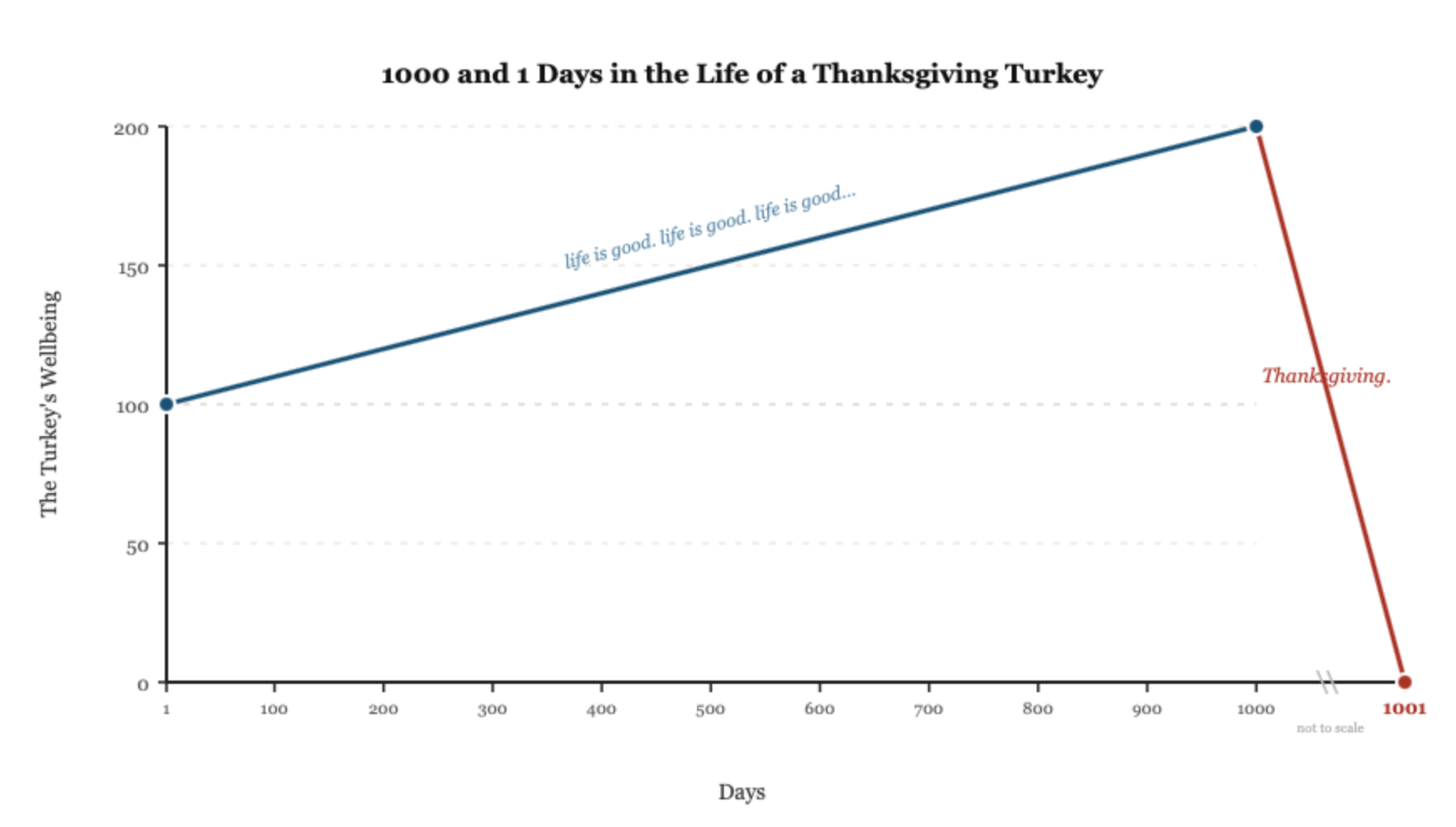
Now, you may think the death of a turkey is a bit of a drastic comparison when we are talking about trust in a leadership context. But it isn't. Two thoughts here: Consistency is only worth so much if it fails when conditions and context change. And results may look like the right thing, but if you don't know the context they were created in you will have a hard time interpreting them correctly.
So, while I love it when I get something delivered or when I can deliver something, I need more to break the transactional barrier. Someone I trust should be able to discern when it matters and when it doesn't matter so much; and when changed circumstances require different actions, or a different result. In a trust relationship, I am sure to get enough context with the results so I am able to assess whether the result still fits my expectations or is actually good for my wellbeing.
Thus, to trust someone, I need to be convinced of a few things. One, I know the person has a thorough understanding of the context of the task, allowing her to adjust to changing circumstances or raise concern when required. Two, I have an understanding of the person's goals and where they align with my own goals. And three, the person shows that she understands my goals and how the task and context relate with it.
For me, this means that building shared context (background) and creating shared goals - not just a common vision of the task result, but of the future state - are key elements of creating trust. Once these are established, checking in on the "why" as opposed to just monitoring the "what" makes collaboration efficient and allows collaborators to self-adjust to changes with confidence. And this is definitely what we need more of in a BANI world.